


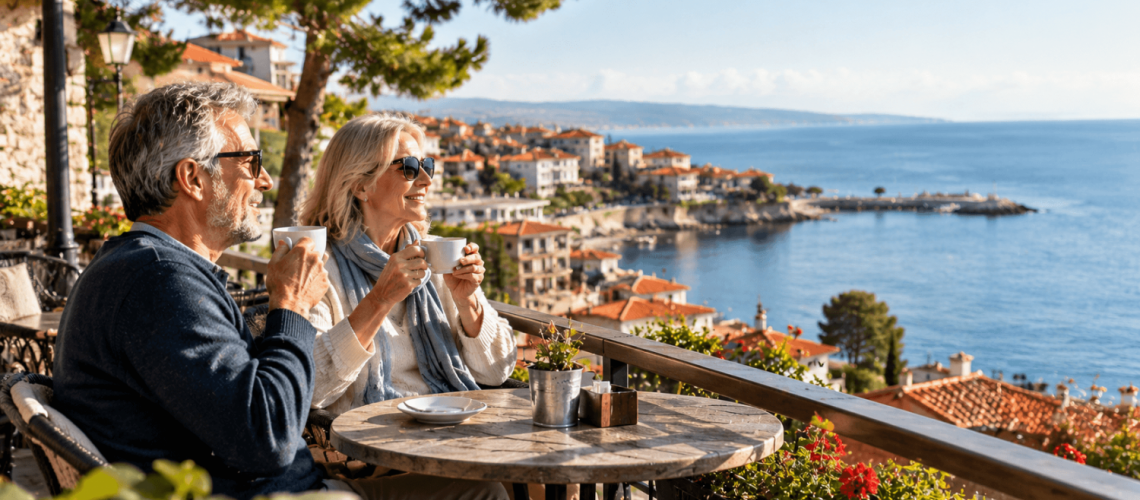

Bulgaria's Black Sea coast has evolved well beyond a short-season summer holiday spot. For retirees from across Europe, it represents a practical combination of accessible residence permits, temperate four-season weather, and living expenses roughly half the Western European average. However, relocating for year-round retirement requires looking past the summer brochures. Winter on the coast demands proper infrastructure, reliable heating, and easy access to healthcare.
Top Year-Round Locations for Senior Living
A frequent misstep among foreign buyers is acquiring a home in seasonal resort strips like central Sunny Beach. By late October, seasonal businesses shut down, grocery options dwindle, and streets remain deserted until May. Seniors need living communities with functioning pharmacies, municipal transport, and medical clinics operating all twelve months.
Along the southern coastline, three key areas stand out for permanent residence:
- Pomorie. The town sits on a narrow rocky peninsula surrounded by the sea and salt lakes. Its primary advantage for older residents is entirely flat terrain: no steep stairs or hills to navigate daily. Pomorie is nationally renowned for its balneology and medical mud therapy centres, which treat joint and musculoskeletal disorders year-round. It features fully operational municipal hospitals, chain supermarkets, and a large international expat community.
- Burgas (Sarafovo and Lazur districts). As Bulgaria's fourth-largest city, Burgas provides high-tier medical facilities, specialised clinics, and an expansive pedestrianised Sea Garden stretching several kilometres along the shore. The coastal suburb of Sarafovo functions almost like an independent seaside village, characterised by low-rise residential buildings, quiet streets, and convenient urban bus connections directly to downtown hospitals.
- Nessebar (New Town) and Sveti Vlas. Nessebar functions as a normal administrative hub with schools, post offices, banks, and polyclinics open throughout the winter. Sveti Vlas, located just north, sits between the Black Sea and the forested Balkan Mountains. This geographic position creates a unique microclimate with clean, pine-infused air recommended for chronic respiratory conditions. However, parts of Sveti Vlas feature hilly topography, requiring careful inspection of street incline before purchasing.
Property Selection: Technical and Practical Criteria
Coastal properties in Bulgaria lack municipal central heating. Winter warmth depends entirely on multi-split air conditioners or thermal convectors. Consequently, building insulation and official occupancy certification (Act 16) are vital parameters. Units lacking Act 16 are billed on commercial electricity rates, substantially increasing winter utility costs compared to domestic household tariffs.
When purchasing brand-new apartments, exploring homes direct from developer gives access to modern building standards, sound insulation, year-round elevator operations, and the opportunity to install underfloor heating during the interior finish stage.
On the other hand, inspecting established resale property allows buyers to examine existing utility bills from past winters, observe permanent neighbour density, and evaluate condominium management quality. In urban residential buildings, resale apartments often carry no mandatory annual maintenance fee (maintenance tax), which yields measurable annual savings on a pension budget compared to resort complexes.
When evaluating prospective property near the sea, prioritizing year-round amenities over beachfront proximity is crucial. Living 500 to 900 meters inland shields buildings from damp maritime winds in January while keeping grocery stores and doctors within comfortable walking distance.
Navigating legal due diligence, title verification, and residency paperwork is made secure with experienced local guidance from Bulgarian Resales, offering end-to-end support through property acquisition and post-sale municipal registration.
